
Five checks for your trades website
Give each main job its own page
- Use separate service pages for the main jobs you take on, such as repairs and full replacements.
- Explain what the work covers, when a visit is needed and how you quote.
- Distinguish electrical fault visits from planned rewires. Explain how customers should contact you for the type of work you cover.
Show where you work
- Show the Glasgow neighbourhoods and postcodes you cover where customers choose a job or ask for a price.
- Explain any differences in travel costs or call-out arrangements before someone gets in touch.
- List your Glasgow coverage and what you need to know about access before arranging an inspection.
Show real work with a short explanation
- Use project photos you have permission to publish.
- Write a short caption explaining the problem and the work completed. Add anything customers should know before asking for something similar.
- Choose a completed project photo with a caption that describes the scope of the work and areas covered, without exposing customer details.
Make it easy to call or ask for a quote
- Make your phone number tappable on mobile.
- Ask for a job description, postcode and contact details. Carry the chosen service into the form.
- For a planned job, ask for the postcode, property type and the work needed. Show when your team will respond to the enquiry.
Keep the search information consistent
- Use the job names customers recognise in the page title, heading and links.
- Link related services and genuine projects so visitors can find more detail.
- Link planned electrical work and repair examples separately so visitors don’t have to guess which service applies.
A real example of a shorter enquiry
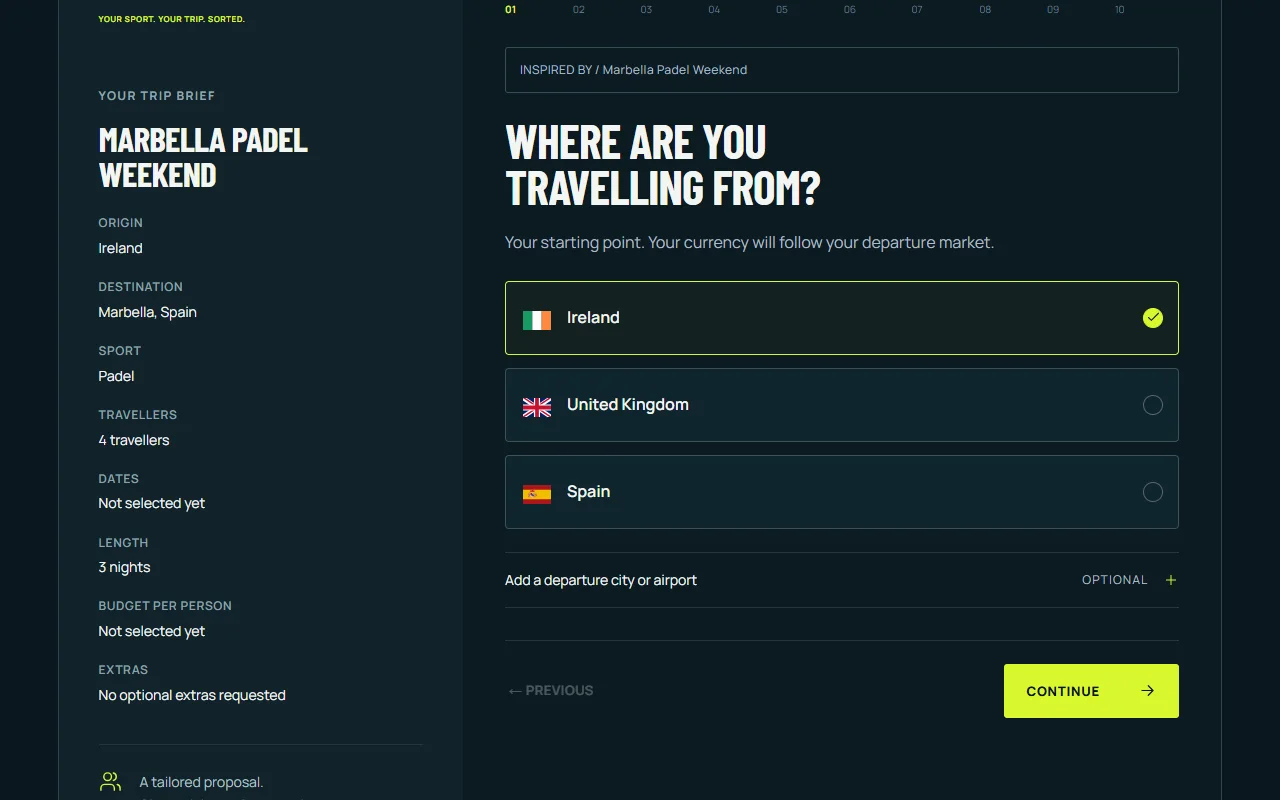
On Travel With Sport, the enquiry form carries forward the sport and destination a visitor chose. The same pattern works for a trades website. Keep the chosen job in the form and ask for the postcode and job details you need to plan the next step.